Crushed aluminum cans become a work of art. Combining rustic laddered boards and brightly colored discarded cans, this grid makes something old, new again. Sparking both interest and conversation, this recycling masterpiece is sure to garner attention.
Monday, 30 March 2015
Why You Should Teach Your Children to Recycle
Recycling is becoming more and more important with each passing year, as landfills grow more populated with recyclable trash. With landfills reaching capacity all over the country, upkeep costs continue to rise, and more than that, the materials in landfills give off methane gas, contributing to air pollution.
Strategizing for sustainable electronics
Federal agencies have embraced the National Strategy for Electronics Stewardship (NSES) and its goals by completing projects that make electronics purchasing, management and disposal more efficient, cost effective and environmentally friendly... read more
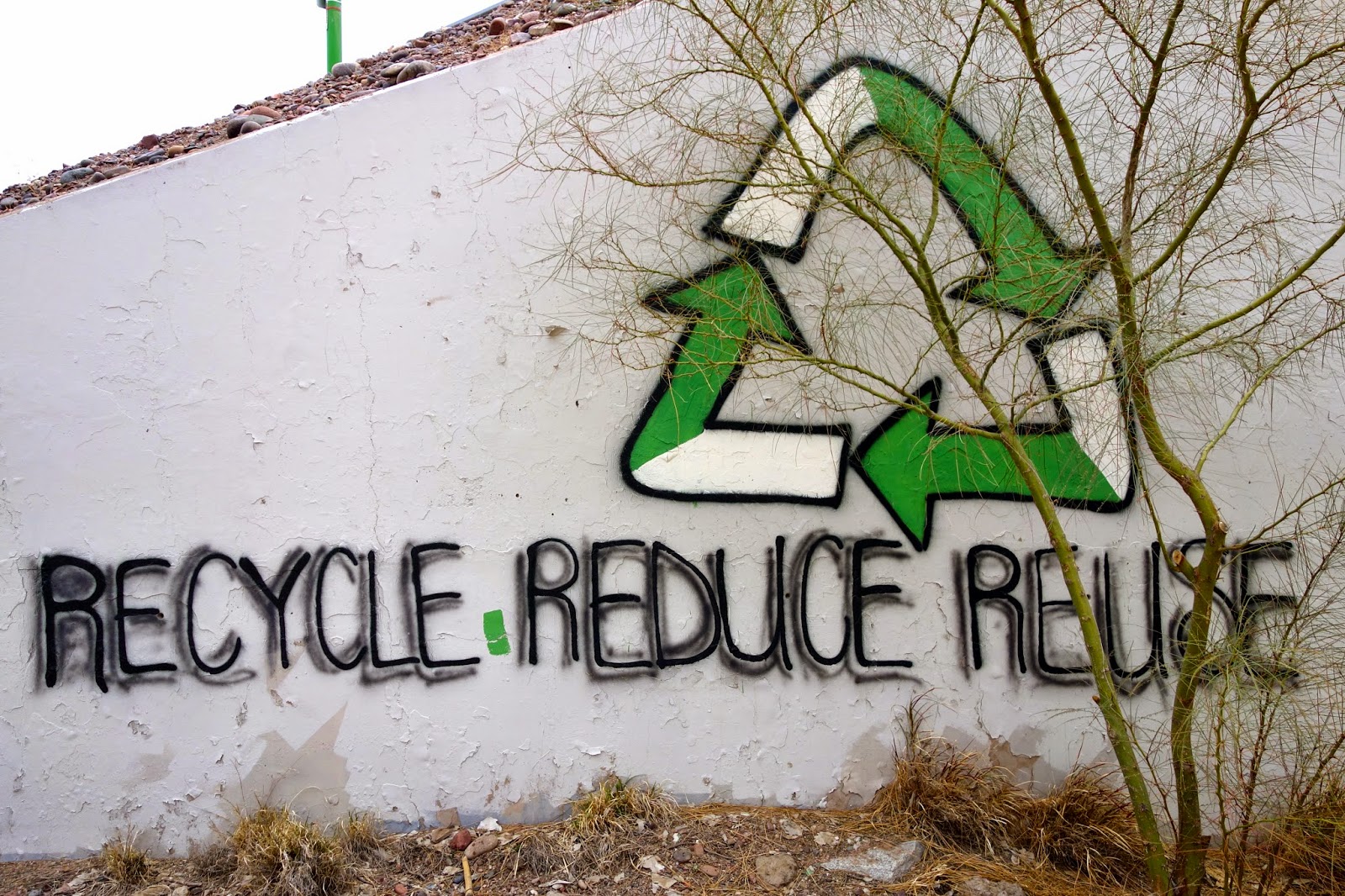
Making a Statement

When it comes to graffiti, this wall makes a statement for the environment. A variation on the well-known symbol, this artist rendered green and white arrows and bold black letters proclaiming recycle, reduce, and reuse on concrete.
Recycling Scrap Iron
Scrap metal is defined within two distinct categories: ferrous (containing iron) and non-ferrous (not containing iron). Ferrous metals are strong and durable, such as steel, cast iron, or wrought iron. These metals are used mostly in construction, though their magnetic properties also make them good materials for things like stoves and refrigerators. While ferrous metals are susceptible to rust, non-ferrous are less likely to oxidize, and their malleability and non-magnetic properties make them good choices for things like wiring and electronics. Because of all their different applications, it's important that the two be separated during the recycling process.
1. Inspection
When scrap metal arrives at a recycling plant, it is screened for radiation before it's even unloaded. If it's clean, it's transported to a conveyor belt, where it's screened an additional time in case any radiation was missed.
2. Fragmentation
A large piece of machinery called a hammer mill breaks down the scrap metal into pieces the size of your fist and the fragments are shaken down into another conveyor belt.
3. Separation
Then, a magnetic drum above the conveyor belt attracts any ferrous materials (since ferrous metals are magnetic), and the rest remains below. Any non-metal material is sucked up at this point, so that only metal remains.
4. Recreation
The ferrous metals are inspected one more time for any problematic materials, and then it's sent to steel mills to be engineered into new steel.
In the end, iron metals have many important applications, and without them, skyscrapers and bridges wouldn’t be nearly as sturdy.
For more information on recycling in San Jose visit this website.
1. Inspection
When scrap metal arrives at a recycling plant, it is screened for radiation before it's even unloaded. If it's clean, it's transported to a conveyor belt, where it's screened an additional time in case any radiation was missed.
2. Fragmentation
A large piece of machinery called a hammer mill breaks down the scrap metal into pieces the size of your fist and the fragments are shaken down into another conveyor belt.
3. Separation
Then, a magnetic drum above the conveyor belt attracts any ferrous materials (since ferrous metals are magnetic), and the rest remains below. Any non-metal material is sucked up at this point, so that only metal remains.
4. Recreation
The ferrous metals are inspected one more time for any problematic materials, and then it's sent to steel mills to be engineered into new steel.
In the end, iron metals have many important applications, and without them, skyscrapers and bridges wouldn’t be nearly as sturdy.
For more information on recycling in San Jose visit this website.
Processing as a priority
Jake Anderson and Millennium Recycling focus on comprehensive collection and detail-oriented processing to offer recycling services to South Dakota... read more
Thursday, 26 March 2015
Stages of the Plastic Recycling Process
Have
you ever wondered what happens to the plastic bottles you throw into
recycling bins? Although most people are aware of the significant impact
recycling has on the environment, many have no clue as to the steps
that are taken during the process.
Stage #1: Let the Sorting Begin
The
first step is for you, as the conscientious recycler, to sort out your
plastics appropriately making sure to remove all caps, corks, and lids.
This will make it easier and more efficient for the machinery to sort
through the products. Also, since there are different types of plastic,
recycling plants further sort out them into distinct categories.
Stage #2: Scrub-a-dub-dub
After the recyclables have been identified and separated into categories, the washing process begins and removes the following:
• Labels
• Adhesives
• Other impurities
• Adhesives
• Other impurities
Stage #3: To Err is Human, To Shred is Divine
Once
the plastics are all squeaky clean, they are loaded onto conveyor belts
which funnel them towards rotating metal teeth that rip them into
shreds of minuscule pellets. These tiny plastic nuggets are then bagged
up for the next phase.
Stage #4: Show Some I.D.
With
the shredding process complete, the plastic are now ready to be
chemically tested to identify their exact specification. This process
will determine the next action to take based on how the plastics are
labelled.
Stage #5: The Finale
The
final stage involves melting the shredded plastic and extruding it in
the form of pellets, which are then ready to be manufactured into new
plastic products.
Today, recycling has become just as easy as simply throwing something away.
For more information on plastic recycling in San Jose visit this website.
Subscribe to:
Posts (Atom)